Ball to Cup: A Beginner's Guide to Drawing Better Ramps
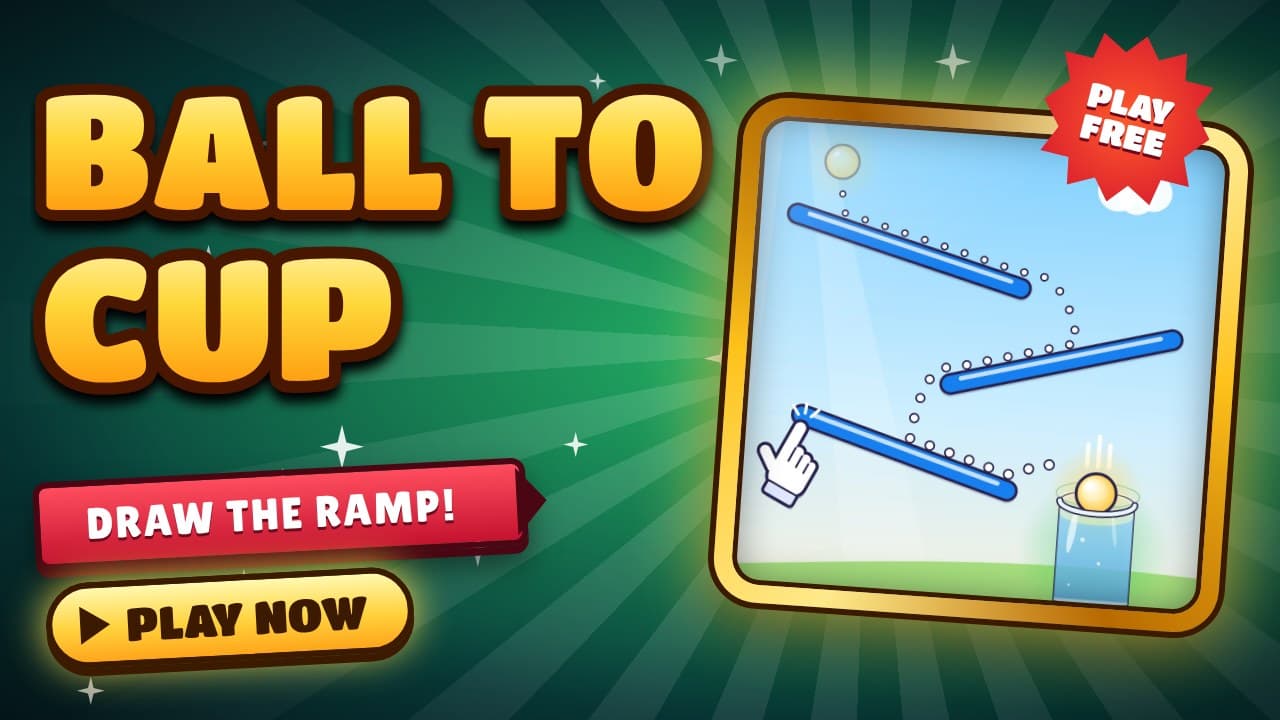
Ball to Cup looks simple: there is a ball, a cup, and a gap between them. But the first time a ball shoots straight past the cup, you realise there is a small craft to it. This guide covers the habits that make the 140 levels easier, whether you are on your first world or stuck on a late one.
Think about the fall, not the start
Most beginners look at the ball and draw a ramp that starts under it. A better habit is to look at the cup first and work backwards. The ball has to enter the cup from above, so ask yourself where it needs to be falling when it gets there, and which direction it should be travelling.
Once you know that, the ramp has one job: to turn the ball's drop into a path that arrives at that spot. A short ramp placed close to the cup often works better than a long, dramatic one that starts at the top of the screen.
Keep slopes gentle
A steep ramp turns a small drop into a lot of speed, and a fast ball tends to skip over the cup or bounce off the rim. A gentle slope keeps the ball moving but lets you control where it lands. If your ball keeps overshooting, make the ramp flatter before you change anything else.
You can also use two short ramps instead of one long one. The first slows and redirects the ball, the second aims it. It is easier to adjust two small pieces than to rescue one badly angled line.
Remove and redraw freely
Every ramp you draw has a small cross you can tap to remove it. Use it. Experienced players rarely get the angle right on the first try; they draw, drop, watch, and then nudge the ramp a little. Each attempt shows you exactly how the ball behaves, which is more useful than planning in your head.
Watching where the ball leaves the ramp is the most valuable information you get. If it lands just left of the cup, move the end of the ramp slightly, not the whole line.
Use Bouncy ramps on purpose
Bouncy ramps act like trampolines. They are not a replacement for normal ramps; they are for shots where the ball has to go up and over something, or where you need to reverse its direction. If a level has a wall or an obstacle between the ball and the cup, think about a bounce before you try to go around.
To make one, tap the Bouncy ramp button first, then draw. Because they add energy instead of absorbing it, keep them short and aim carefully.
Be patient with moving cups
Later levels have cups that slide or move. Do not drop the ball straight away. Watch one full cycle first and notice how long the cup takes to pass the spot you are aiming for. Then time your drop so that the ball arrives when the cup is there.
Fans and other obstacles work the same way: watch them for a few seconds before you draw. A level that looks impossible often turns out to be a timing puzzle.
Play for stars, then for fun
Each level can earn up to three stars, and you collect coins and open chests as you go. If you are stuck, move on and come back later; your progress is saved in your browser, so the level will be waiting. The game is meant to be relaxing, and a fresh look at a level after a break often makes the answer obvious.
When you are ready, jump back into Ball to Cup and try the first level again with these ideas in mind. You may be surprised how differently you draw.