Growing Ball: How a Bouncing Ball Plays Beethoven
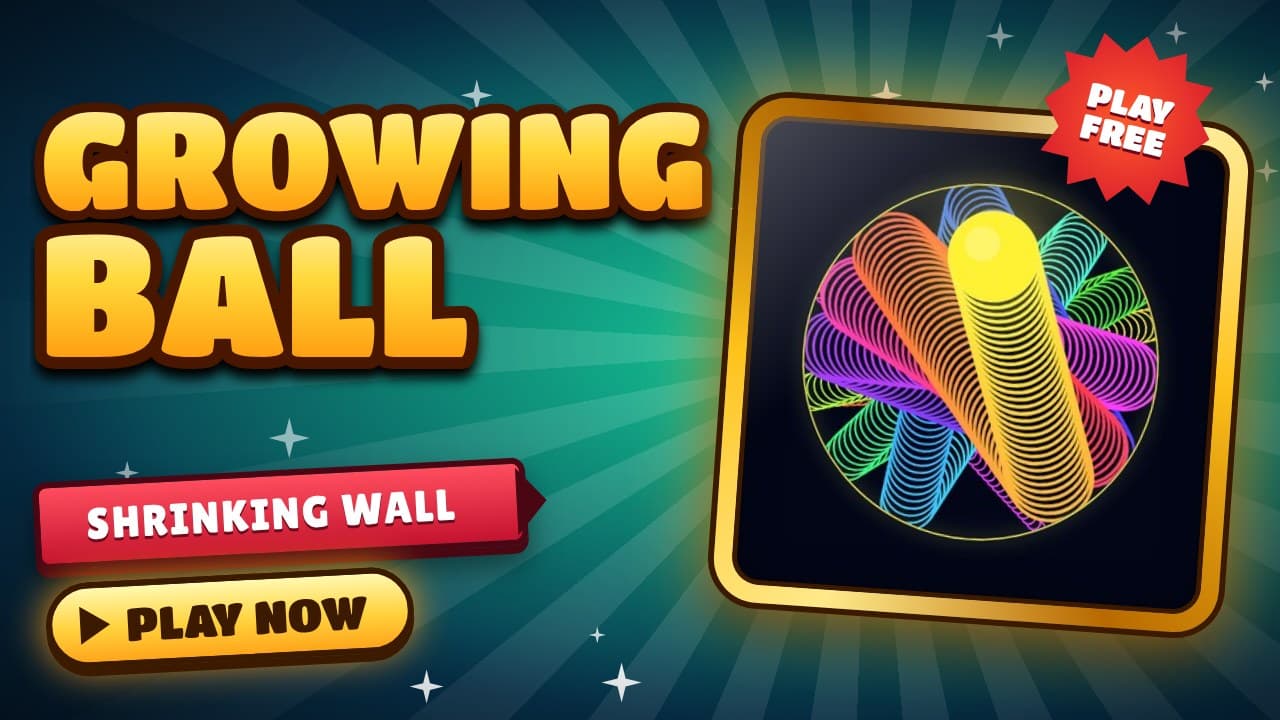
Growing Ball has one ball, one circle and one rule: every bounce plays the next note of a famous melody, and the ball grows a little each time. The music, the speed-up and the reveal at the end all come from that single idea.
The rules in plain words
Pick a song or let the game choose one, then press Start. A small glowing ball launches from the centre of a neon circle in a random direction. It always travels at the same speed and bounces off the circle like a mirror, with a small random twist each time so the path never repeats.
Each bounce plays the next note of the tune and makes the ball a little bigger. On the final note the ball fills the circle, bursts in a shower of light, a closing chord plays and the answer appears.
Why the tune speeds up
A bigger ball has less room to travel, so it reaches the wall sooner. That means the gaps between notes shrink as the song goes on: the opening notes stand alone, and the ending races. The growth is set so that the ball fills the circle exactly on the last note, which gives every run a natural climax.
The songs
All the melodies are classical pieces long in the public domain: Für Elise, Ode to Joy and the opening of Symphony No. 5 by Beethoven, and Eine kleine Nachtmusik, Rondo alla Turca, Symphony No. 40 and the Twinkle, Twinkle variations by Mozart.
Only the pitches come from the music. The ball's bounces set the rhythm, which is what makes the puzzle fun: you have to recognise the shape of a melody without its usual timing.
Tips for guessing early
Listen for the direction of the notes rather than their timing. Für Elise rocks back and forth between two neighbouring notes, Symphony No. 5 repeats one note three times before dropping, and Ode to Joy walks up and down step by step.
Play it with friends and see who names it first, then try a song you have not heard yet.